Author: Lee Weems

Six For Maybe, Part 2

Fresh off of the inaugural Rangemaster Master Instructor class and accompanying social media hullabaloo, I wrote Six For Maybe, a discussion on revolver reliability.

Today, I discussed the issue with my boss who will soon have been a lawman for a mere 42 years. He was the top gun in his academy class shooting a Smith & Wesson Model 66, and he worked for an agency that issued Navy surplussed Smith & Wesson Model 10s. He has some time behind a wheelgun.

He told me that he didn’t remember revolvers failing at the rate in which I have seen them fail in various classes. He then went on the tell me about the old 10th Congressional District Pistol Matches (a pistol match open to all of the agencies within the 10th Congressional District of Georgia) and other training events, and he said, “I just don’t remember any real failures that weren’t related to ammo”.

So then I asked, “Did you carry a brush with you to the line?”

What followed was a detailed description of how they all carried brushes and cleaning cloths so that during any shooting event they could clean out under the extractor star or wipe down the breach face and other such sundry tasks.

So then I asked, “How often did you do all of that?”

He described that at least every 100 rounds or so he would go through the above described procedure?

So then I asked, “In the academy, was somebody always yelling at y’all to do all of that?”

The answer was an affirmative, but then he said, “I guess at a certain point we just all knew that we had to do all of that stuff.”

So then I asked, “Would you foresee problems if somebody was told by a buddy or gun shop guy that to use a revolver because it was “six for sure” and who didn’t understand the maintenance needs of a wheelgun?

The answer was in the affirmative.

Going back the original piece and the position that Darryl Bolke expressed, if you are going to seriously run a revolver, you have to be committed to maintaining it constantly while shooting it.

The only way to develop skill is to train, and in order to train, you are going to have to maintain.

That is a vital point that must be driven home to those who are going to use a revolver.
Six For Maybe

The oft-uttered mantra for wheelgun fanciers is “six for sure” referring to the supposed reliability of the revolver. Whether or not such is actually the case is a matter of perspective.

I pinned on a badge at the very end of the revolver era. I attended a regional academy, and only two agencies still mandated revolvers. Those cadets worked in jails, and if they moved to a field division, they transitioned to semi-autos.

Of note, we were required to shoot the “Double Action Course” (GDAC) to graduate from the academy. That course had a stage in it based on the Newhall Incident, which occurred in 1970, requiring those shooting revolvers to fire two rounds, manually load two rounds, and then fire two more rounds all in 15 seconds. Those of us shooting magazine fed guns simply used a two-round magazine. I attended the academy in 1999. The GDAC was replaced circa 2004. Some things are slow to change. The replacement course is “revolver neutral” meaning that six-round magazines are mandated so that those shooting revolvers and semi-automatics all reload at the same time.

A decade or so later, I traded into a Smith & Wesson 586 so that I could shoot in an IDPA revolver match. I won my class and earned a match bump in classification with it. One thing I didn’t include in the original piece on that match was that in the later stages, I had trouble with the cylinder sticking. I brushed the cylinder out and tried to clean it in a safe area, but it took a detailed cleaning after the match to get it running smoothly.

In 2014, I met Tom Givens of Rangemaster and began to train with him on a regular basis. I had the chance to attend his Defensive Revolver class as a student in 2015. In that class, we had three revolvers go down hard, as in done for the day. I assisted him with teaching an iteration of the class earlier this year, and we had revolvers fail in that class as well.

This past weekend (11/15-17/2019), I was part of the inaugural Rangemaster Master Instructor class. The class is only open to those who have already completed the Rangemaster Instructor Development and Advanced Instructor Courses.

We had four revolvers mechanically fail, and we had a fifth revolver get deadlined when the bullet from a squib round lodged between the forcing cone and the cylinder. This was during the revolver qualification course, and the student was forced to continue with his backup gun (a J-frame). This is the second time I have seen this happen. The other time was a first hand experience with one of my own revolvers. While this is an ammo related problem, the firearm is put completely out of action, and the fix involves using a rod and hammer to beat the bullet back into the chamber so that the cylinder can be opened. That’s not going to happen in time to save your life.

One of the failures was due to a small piece of debris binding up an action. This was at the outset of the revolver shooting. The person shooting this revolver was Chuck Haggard.

Another student in the class reported the above on Facebook resulting wheelgun lovers forming crowds with torches and pitchforks because their beloved platform had been impugned. Other responses ranged from “yeah, okay” to “Why would anyone shoot a revolver anyway?” The answer to that last question is that firearms instructors teach students, and sometimes students show up with revolvers…

One response, however, came from Darryl Bolke of Hardwired Tactical Shooting.

I understand the point Daryl’s point. I also think that by making his point he disproves his thesis somewhat.

I fall somewhere in between on the issue. I agree with Daryl in that a well maintained revolver in the hands of someone who knows how to use it can be formidable for the first cylinder full of ammo. I’ve also seen enough revolver failures in training and competition environments to worry about when that failure is due.

I enjoy shooting revolvers and will continue to do so. I very much enjoy teaching revolver skills. I’ll even continue to carry a revolver in Class A uniform for ceremonial functions because I personally think that they have much more class than any “bottom feeder”.

All things considered; however, I simply have much more faith in a quality semi-automatic for social purposes.

I’m not trying to convinced readers anything here. I know that even though I write that, some readers will assign a conclusion to me and then either praise or cuss me for it. Other readers will be mad, but they won’t know why. Such is the case when you put something on the interweb.

I’m not trying to change Darryl’s mind. He is certainly qualified to espouse his conclusion.

As for the Master Instructor class, I shot a perfect score on the qualification course as did two other students. Each of us was shooting a service sized revolver with adjustable sights. Nobody shooting a small frame revolver or one with fixed sights shot a perfect scores. Maybe there is a clue there.

To settle the matter, the three of us participated in a shoot-off. I didn’t win the tiebreaker as I had two failures to fire…


Down the Practical Hole: Part 3

When I wrote the first piece in this series, I wasn’t expecting it to turn into a series, but the responses led to the second piece, which again, I thought would put the issue to rest. It didn’t. It seems that I have stumbled onto a topic that has either sparked or tapped into a previous field of interest among shooters.

The point that I thought I made in Part 1 was that in the current era of the American rifle, the AR is indeed the most practical (and efficient) option. In Part 2, I outlined my selection criteria and why I passed on the OEM factory options on the market.

I KNOW that I can custom build the rifle that I want.

I KNOW that I can modify an existing rifle into what I want.

If I may be graciously blunt, I don’t need either of those options pointed out to me. I’m already aware.

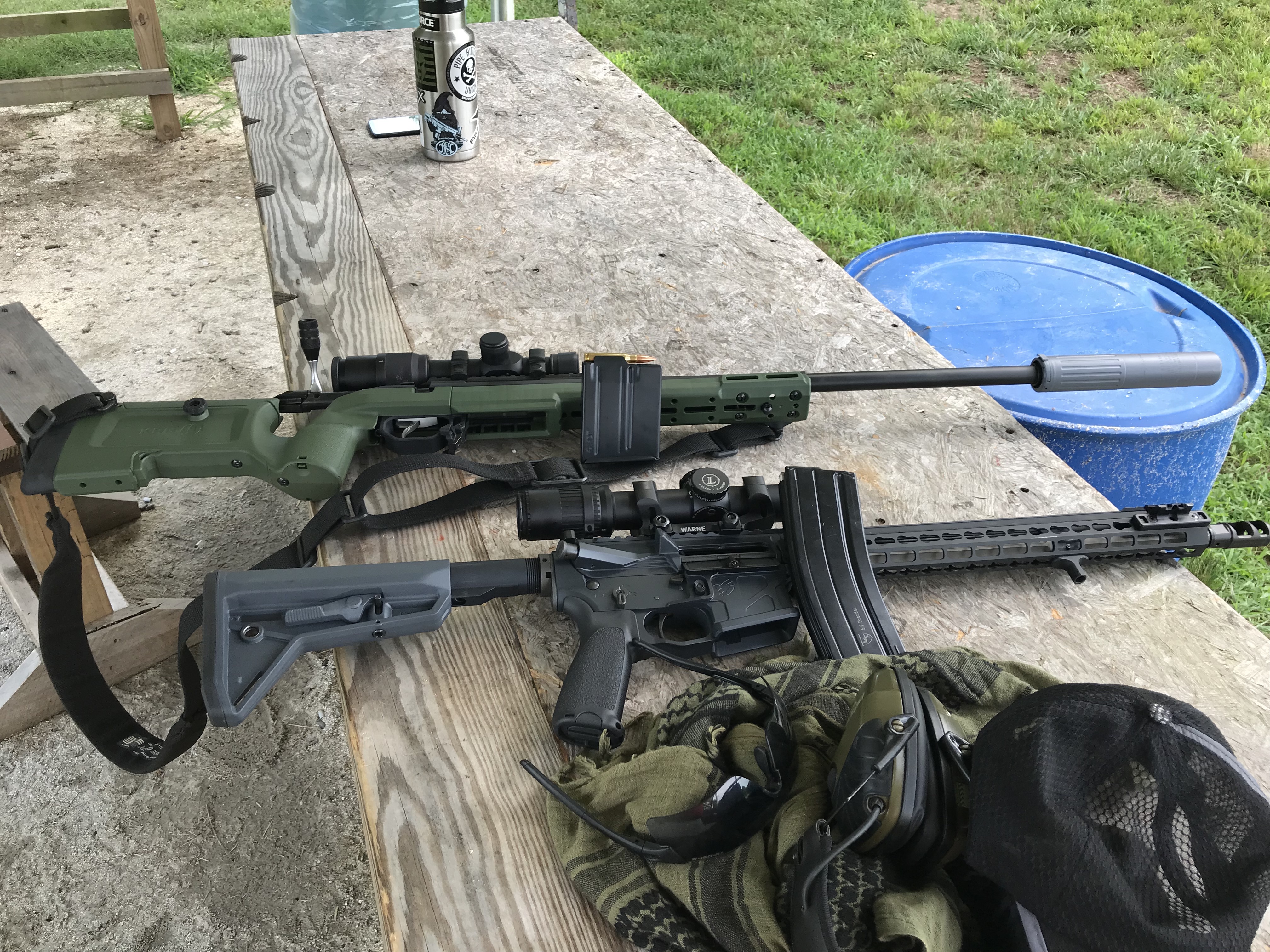
Erik Lund dropped by my Social Shotgun/Levergun Manipulations class yesterday at the Red Hill Range, and he brought along two rifles for testing.  One was a Tikka bolt gun in .308 equipped with a Kinetic Research Group stock, and the other was an AR build in 6.5 Grendel (6.5G).

Tikka .308 and an AR build in 6.5 Grendel

I shot two 10-round mags through the bolt rifle; one each suppressed and unsuppressed.  I fired one mag of Wolf ammo through the AR along with one mag of Hornady 123gr SST.  All shots were on steel at 100 yards.  This was not an extensive test, and I make no pretense that it was.  It was simply to let me get some trigger time with a bolt gun and to get a feel for the 6.5G through an AR.

The session led me to two conclusions.  The first is that my determination in Part 1 holds true.  The AR was pleasant to shoot.  The recoil was hardly more than that of an AR in .300 Blackout, but the ballistics are far superior, and I am simply a few mouse clicks away from the configuration I desire.

The recoil from the .308 was not harsh.  It had more muzzle rise than push against the shoulder.  However, a lighter recoiling round such as the 6.5 Creedmoor would be more to my liking.  The 20″ barrel was heavier and more unwieldy than what I want for the intended role.   Thus, my specs of a lighter, handier bolt gun as outlined in Part 2 were validated.

Even though I am now more convinced of the expediency of the AR-option, I am still intrigued by the idea of a bolt gun, and I keep coming back to a particular rifle.  I just need to get my hands on one to see if I like the feel of the stock.  If I do, perhaps there will be a Part 4.

I’ll close with the following video.  There’s a rifleman in it doing some impressive work, and I imagine one of those straight pull bolt rifles would be mighty practical.


Down the Practical Hole: Part 2

When I wrote Down the Practical Hole, I had no intention of it leading to additional articles on the topic, but the responses have been both amusing and bemusing, and I am thus prompted to write at least Part 2.  Whether or not there will be a Part 3 will depend upon whether or not I move forward in this line or if I simply accept my previous conclusion and purchase an appropriate AR-upper.

I specifically didn’t outline my preferred specifications as I knew I was posting the piece on the interweb and that there were would be no shortage of people willing to tell me that I was wrong about what I want in my rifle.

I’m not trying to pick a rifle for anyone else.  I’m picking a rifle for me, and I don’t imagine myself to be Jeff Cooper.  As I am not trying to convince anyone of anything here, I won’t argue my specifications.

At this point, I want to thank Erik Lund for patiently enduring my barrage of phone calls and text messages as we painstakingly evaluated options.  Erik has been extremely generous with his time and expertise for as long as I have known him.

I do appreciate the many well-intentioned suggestions of “Have you looked at the XYZ rifle?”, but when I stated that I studied the current offerings and found none to my liking I must not have been clear because what I meant was that I had studied the current offerings and found none to my liking.

Here we go:

First, let’s dispense with the caliber discussion.  I wanted a round capable of taking hog and deer sized game at 300 yards, perhaps 400.  Erik is quite fond of the 6.5 Grendel; so, I looked at several options in that round.  Quite frankly, if the Ruger American Ranch were available in 6.5 Grendel, the search would have started and stopped there.  Yes, I know they offer it in other configurations of the American, but none are to my liking.  As I wrote in the original piece, I didn’t want to spend a lot of money and effort on mods.

I also considered 6.5 Creedmoor (6.5CM henceforth) and the venerable .308 Winchester/7.62 NATO.  The plus for 7.62 NATO is the availability of fodder ammo for practicing the practical rifle techniques; however, ultimately I decided on 6.5CM as it will perform as desired, but it generates less recoil than 7.62 NATO.  Plus, it’s a cartridge that is on the rise, and it has staying power in the market.  Again, this is my rifle.  If you prefer 7.62 NATO, good for you.

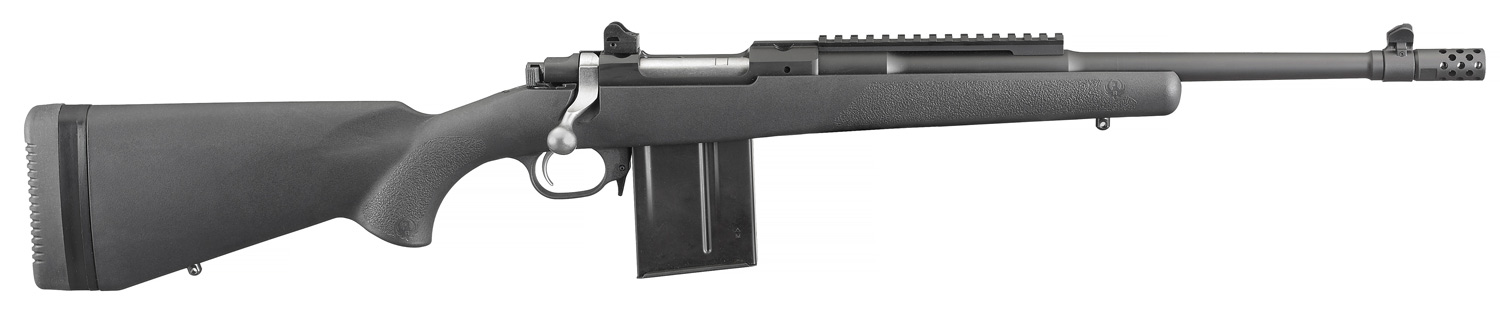
The choice to go with 6.5CM knocked the Ruger and Savage Scout rifles out of contention.  Both are fine rifles, and I was (and still am) very tempted by them.  I also don’t want a forward mounted scope.  I am aware that the Ruger will accept a traditionally mounted scope; however, this would mean giving up the rear sight, and while iron sights weren’t an absolute requirement of mine, I just don’t like the idea of removing them.

Ruger Scout Rifle

Note:  Dr. Sherman House and I tossed around the idea of a forward mounted red dot paired with a magnifier in a flip mount.  Ultimately, we concluded that eye relief on the magnifier would be problematic if using the forward rail.  In a traditional rail setup,  a variable power scope with a true 1x power would accomplish the same thing as the magnifier and red dot; so, why bother (he typed rhetorically)?

Now, let’s move on to my specs:

  • 16-inch, threaded barrel (18 would be acceptable but NO longer)
  • Length of pull NO longer than 13-inches
  • Accepts a common magazine such as an AICS pattern mag or a PMAG
  • Traditional scope location mount/rail
  • Strongly preferred:  tang safety
  • Somewhat preferred:  iron sights

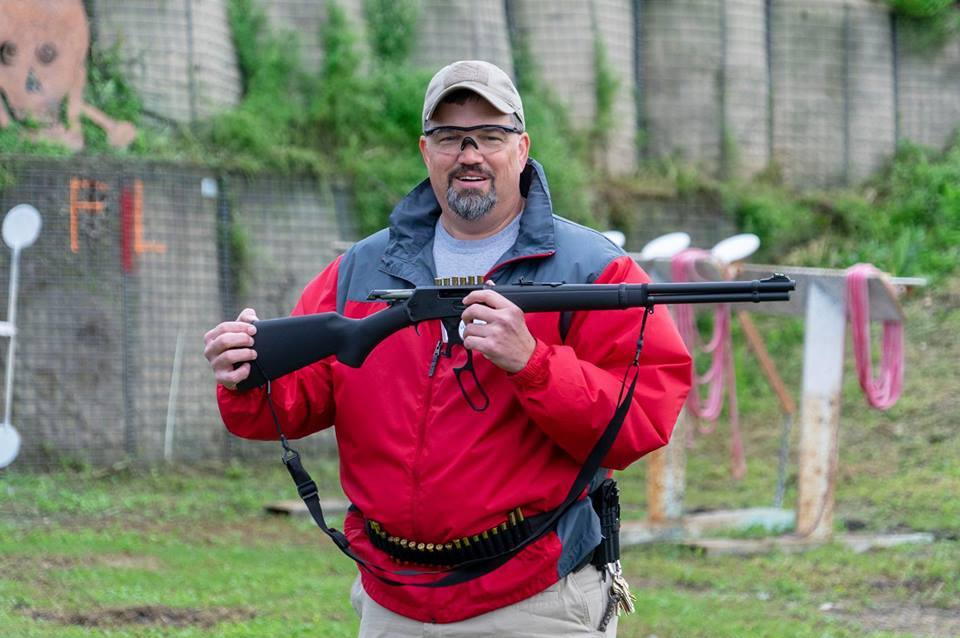
Again, I am not trying to convince anyone of the merits of the listed criteria.  I have reasons for each of them.  For instance, the shorter stock makes it easier to mount the rifle centerline and to get into other-than-standing firing positions as well as maneuvering in and out of vehicles or through buildings, and it helps if wearing a thick coat or body armor.  You may have noted that the stock on the levergun I’m holding in the original piece is so shortened.  It’s actually around 12.5.  I run my shotgun stocks at 12.5 as well.

I am fully aware that rifles can be modified to meet the above-listed criteria.  I’m also aware that each modification has an associated cost.

Down the Practical Hole

I was fourteen years old or thereabouts when one of the elders in my family handed me an old Glenfield Model 30 and told me I had proven ready to receive it. I’ve maintained a steadfast loyalty to the levergun in the decades since that day. I grudgingly accepted AR platform rifles when my teaching responsibilities required me to do so.

Levergun

The author during his Social Levergun presentation at TacCon19. Photo credit: Tamara Keel

Still, I have maintained a firm grip on my levergun roots. I presented a block on leverguns for defensive use at the 2018 and 2019 Tactical Conferences, and I offer a Social Levergun class.

After my presentation at TacCon19, one of the attendees commented on the need to keep social bolt action rifle skills alive. That comment stuck with me.

I will digress here to mention that about that same time, my buddy, Erik Lund, told me about his adventures in hog hunting out west and taking hogs at distances up to 400 yards.  I love it out west.  I like shooting hogs.  Therefore, I’d probably enjoy shooting hogs out west.  One problem became readily apparent though in that I don’t currently (at the time of this writing) own a rifle suitable for taking wild sausage humanely at such distances.

All of this, of course, was a clear sign that I need a general purpose turn-bolt rifle.

Source material for the “practical rifle” is not scarce as the great Jeff Cooper wrote prolifically on the topic.  Two extant courses that are keeping Col. Cooper’s material alive are Gunsite’s 270 Rifle and Randy Cain’s Practical Rifle.  Aside from those two schools, however, rifle training has taken a marked turn in a Stoner-ly direction since Col. Cooper’s days.

Chris Baker of Lucky Gunner Ammo has addressed the topic in several of his excellent videos such as this one:

Chris delved into modern bolt action rifle equipment here:


The software solution is out there should one choose to look for it.  The hardware solution is actually more difficult.  I rolled out the above mentioned levergun class in early 2013 at the height of a politically induced buying surge that resulted in a dearth self-loading rifle availability.   The current situation is the reverse.  AR-pattern rifles are readily available in a myriad of configurations.  Current bolt and lever rifle production quality is a shadow of what it once was (on a craftmanship scale) whereas AR-pattern manufacturing is in its golden age.

The most simple solution for a western hunting excursion would be to buy a new upper in a caliber such as 6.5 Grendel and use it with one of my current lowers at half the cost of a new rifle.

Finding a from the factory bolt action rifle in the configuration and caliber that I want is proving to be difficult.  While some of the available rifles could certainly be modified accordingly, such modifications would greatly add to the cost of the rifle.   

I set out to specifically to not go the AR route, but it turns out that it is actually the most “in common use” rifle platform currently available on the American market. 

It’s simply the most… practical.  


FPS-1 Target

I wanted a target that could be printed cheaply and easily at local print shops thus cutting out the delay and expense of ordering targets from the online suppliers.  I created the FPS-1 Target in Microsoft Publisher.  A talented coworker who would only relent to sign her work after repeated cajoling drew the eyes, nose, and heart on it, and then I scanned it.  (Thanks Beth!!).  I’m making it readily available to those who like it and want to use it.

The FPS-1 Target should be printed on 11″ x 17″ paper.  The face area is 5″W x 4″H with an inner oval that is 4″W x 2.5″H.  The chest area is 7″W x  7″H with an inner heart box that is 3″W x 5″H.

DOWNLOAD TARGET

FPS-1jpg

DOWNLOAD TARGET


Lifestyles of the Armed and Dangerous: Defensive Pistol Skills and Social Shotgun with Lee Weems of First Person Safety

Here is a review of a pair of classes I taught in Waverly, TN.

Sherman A. House DDS's avatarCIVILIAN DEFENDER

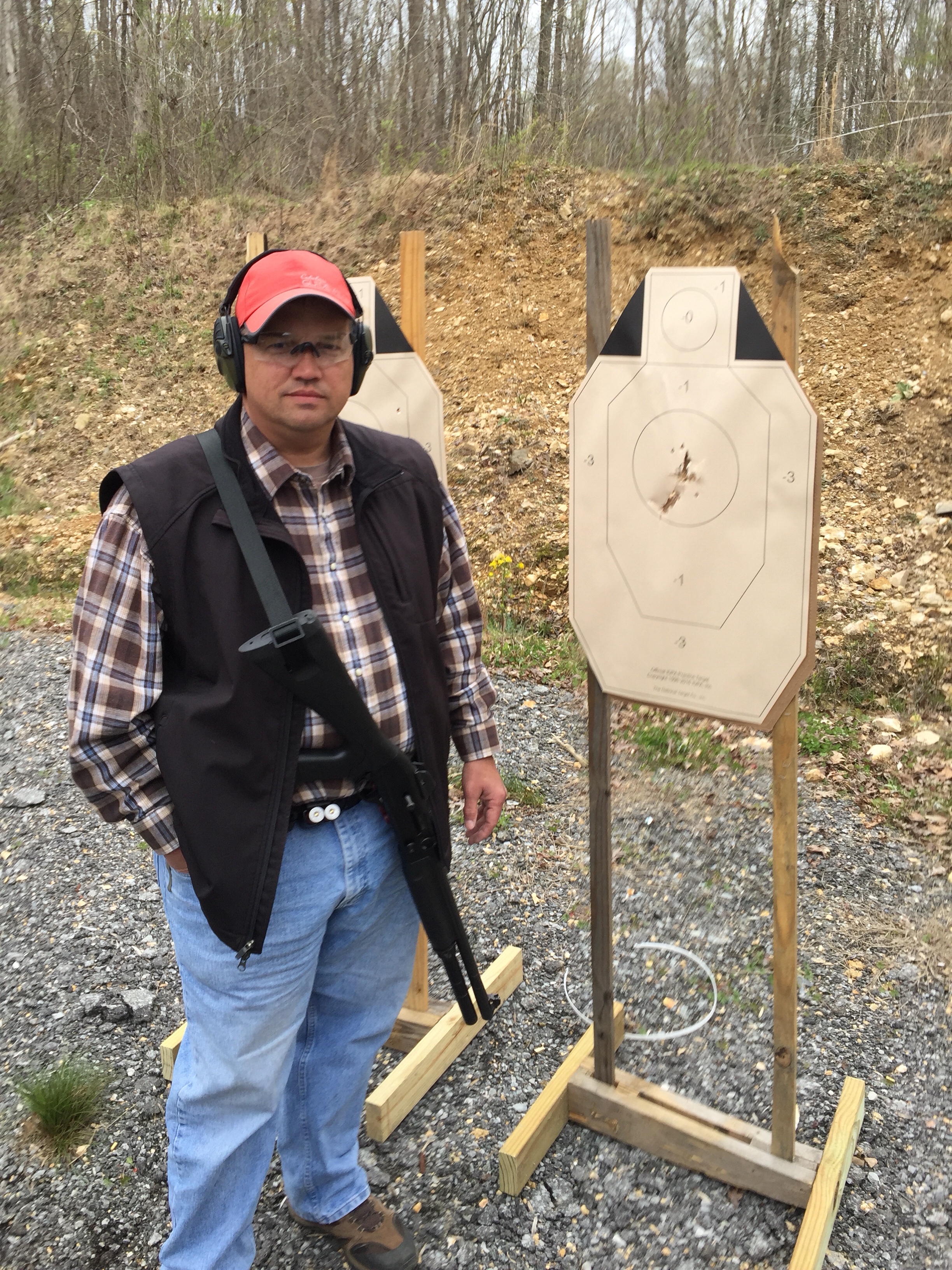
img_0319 Chief Weems, with his Benelli M1 Super 90.  Federal Flite Control was emphasized for it’s ability to keep the pattern on an IDPA target (in the, “down zero,” ring) which means that with practical application of accuracy, keeps the shooter accountable for all 8 or 9 (both quantities of buckshot are available in the Flite Control configuration) pellets, and (wait for it…) complies with the Chief’s dictum of full compliance with the 4 FIREARMS LIFESTYLE RULES!
I recently had the pleasure off hosting and attending a weekend of training with Lee Weems.  Lee is a Rangemaster-Certified Instructor, as well as running his own training company, First Person Safety.  Lee is the Chief Deputy for the Oconee County Sheriff’s Office in Georgia.  And although Lee embodies the archetype of the quiet, Southern Lawman, he has quite a bit to say about the lifestyle adaptations required to be a competent, safe, thoughtful…

View original post 1,864 more words

Rehabbing Targets

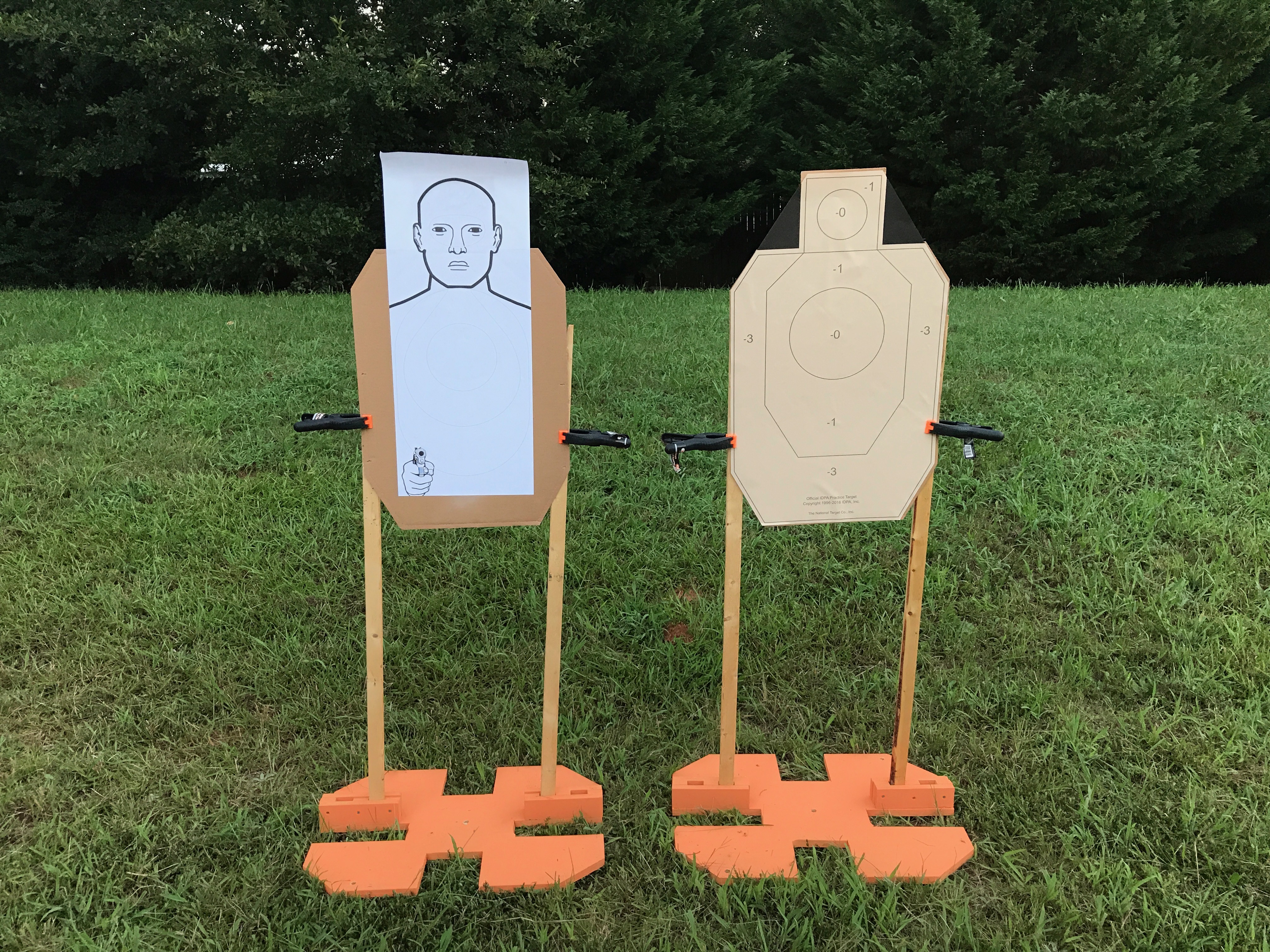
Don’t throw those cardboard IDPA or IPSC targets away.  You can easily extend their useful life.  All you need is some quality spray adhesive and some paper targets as shown below.

IMG_9856

On the left is the San Jose Repair Center from Action Target.  The cost is $0.21 each plus shipping if you order at least 100 of them.  I’ve started using these in my classes.  I like the scoring areas for several of my drills and courses of fire, and a new repair center can be put up quickly.  This also saves a lot space in my truck.

On the right is a paper “Langdon Cut” IDPA target from National Target.  An order of 100 is $37.00.  You have to specify the “Langdon Cut” when ordering.

Claude Werner of The Tactical Professor brought these repair centers from the TargetBarn.com to my attention; so, I am updating this article to include them as an option.

That fine gentleman of the range, The Magnificent Steve, came up with a nifty target stand design.  He was kind enough to make some for me that will work for both 18″ and 24″ width targets.

The plans for the stands are available here:

Steve Stackable Stands


Review: The Complete Combatant (and Sundry Others)

Lee Weems's avatarThat Weems Guy

I first became aware of The Complete Combatant due to their hosting Caleb Causey of Lone Star Medics for one of his medical courses.  Caleb is a a regular presenter at the Rangemaster Tactical Conference, and that is how I met him.  I attended the course, that is how I met Brian and Shelley Hill, the owners of The Complete Combatant.  This introduction resulted in Brian and Shelley hosting two of my Police-Citizen Contacts courses.  They have another class with Caleb coming in September; so, be sure to check their schedule IF you aren’t planning to spend that weekend with me at Social Levergun.  Quality medical training should be a part of your personal safety plan, and Caleb has a solid program.

Another example of the classes that they are bringing in to augment their own offerings, they hosted Andrew Branca’s Law of Self Defense course.  Andrew’s material…

View original post 449 more words